
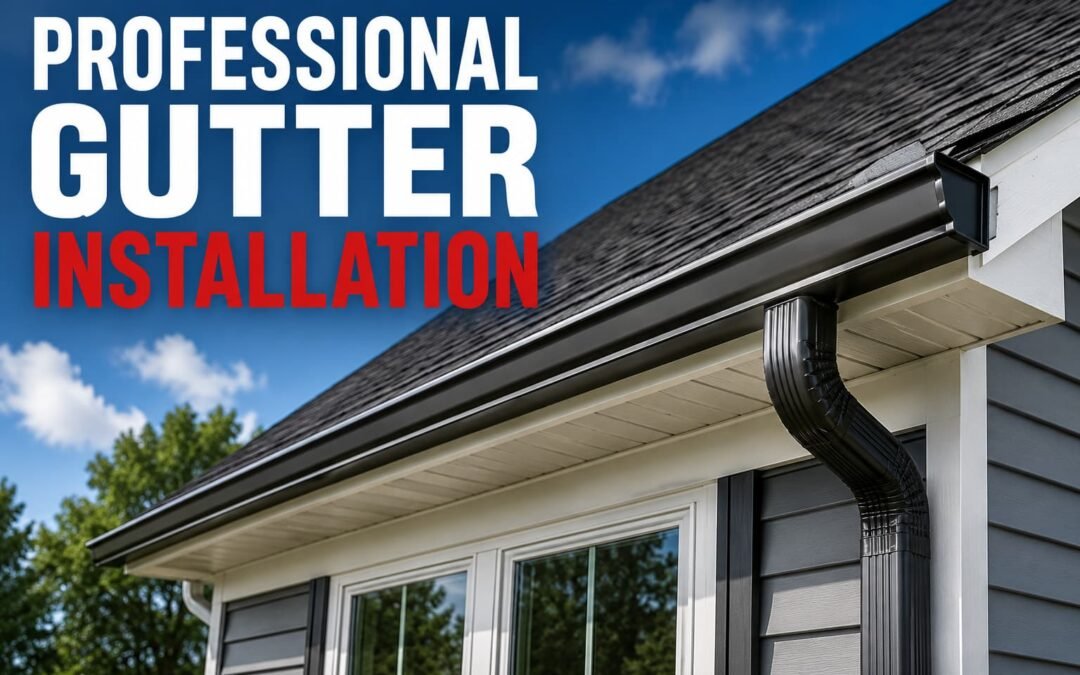
Your home’s gutters may not be the first thing you notice when looking at your property, but they play an important role in protecting your roof, siding, landscaping, foundation, and exterior surfaces from uncontrolled rainwater.
A properly designed gutter installation does more than collect water from the edge of your roof. The gutters, downspouts, pitch, outlets, and discharge locations need to work together to move rainwater away from your home efficiently.
For New Jersey homeowners considering new gutters, understanding how a gutter system should be designed can help you make a better decision—and avoid installation problems that may not become obvious until the first major storm.
Why Proper Gutter Installation Matters
The purpose of a residential gutter system is simple: collect rainwater from the roof and safely direct it away from the house.
The installation itself, however, requires more than simply attaching gutters along the roofline.
A poorly planned or improperly installed gutter system can contribute to:
- Water overflowing during heavy rain
- Water running behind the gutters
- Sagging or separating gutter sections
- Fascia deterioration
- Soil erosion around the home
- Damaged landscaping
- Water collecting near the foundation
- Premature gutter failure
This is why homeowners should look beyond the appearance of new gutters and consider how the entire drainage system will perform.
What Should Be Evaluated Before New Gutters Are Installed?
Before installing gutters, a professional should evaluate the property and determine how water moves from the roof to the ground.
Important factors include:
1. Roof Size and Design
A larger roof collects more rainwater than a smaller roof. Roof valleys and complex rooflines can also concentrate large amounts of water into relatively small sections of gutter.
Those high-flow areas may require additional drainage capacity.
2. Gutter Size
Not every home has the same drainage requirements.
Two commonly used residential gutter sizes are 5-inch and 6-inch gutters. The appropriate size depends on factors such as roof area, roof configuration, rainfall conditions, and how water is distributed across the gutter system.
Bigger isn’t automatically better, but an undersized system can struggle during heavy rain.
3. Gutter Pitch
Gutters may look perfectly level from the ground, but they need to be installed so water moves toward the appropriate outlets and downspouts.
Incorrect pitch can cause standing water or contribute to poor drainage.
4. Downspout Placement
Downspouts are one of the most important—and sometimes overlooked—parts of a gutter installation.
A gutter can collect water effectively and still overflow if the system cannot discharge that water quickly enough.
The number, size, and placement of downspouts should complement the gutter system.
5. Where the Water Goes
Moving water through a downspout isn’t the end of the job.
The system should also direct water to an appropriate discharge location away from areas where it could contribute to erosion or water accumulation around the home.
5-Inch vs. 6-Inch Gutters: Which Is Better?
One of the questions homeowners frequently have when installing new gutters is whether they should choose 5-inch or 6-inch gutters.
| Factor | 5-Inch Gutters | 6-Inch Gutters |
|---|---|---|
| Typical residential use | Common | Common |
| Water capacity | Lower | Higher |
| Large roof areas | May be sufficient depending on design | Often worth evaluating |
| Areas receiving concentrated roof runoff | May require additional planning | Greater capacity can help |
| Cost | Typically lower | Typically higher |
| Best choice | Depends on the property | Depends on the property |
The important point is that gutter size should be selected according to the home’s drainage needs rather than appearance alone.
A professional evaluation can determine whether larger gutters, additional downspouts, or another configuration would provide better performance.
Why Do New Gutters Sometimes Overflow?
Homeowners often assume overflowing gutters must be clogged.
That isn’t always the case.
If relatively new and clean gutters overflow during heavy rain, possible causes can include:
- Insufficient gutter capacity
- Too few downspouts
- Poor downspout placement
- Incorrect gutter pitch
- Concentrated runoff from roof valleys
- Improper installation
- Blocked outlets or downspouts
- Drainage restrictions
This is an important distinction because repeatedly cleaning an incorrectly designed gutter system won’t solve the underlying problem.
The goal isn’t simply to install gutters. The goal is to install a drainage system capable of handling the water coming from your particular roof.
Seamless Gutters vs. Sectional Gutters
Homeowners researching gutter installation will often encounter both seamless and sectional gutter systems.
Seamless Gutters
Seamless gutters are typically fabricated to fit the dimensions of the home, reducing the number of joints along long gutter runs.
Potential benefits include:
- Fewer seams
- Clean appearance
- Custom sizing for the property
- Fewer potential leak points along straight runs
Corners, outlets, and other transitions still require connections, so professional workmanship remains important.
Sectional Gutters
Sectional gutters are assembled from multiple pieces.
They can be suitable in some situations, but the additional joints create more locations that may eventually require maintenance.
For homeowners planning a complete residential gutter installation, it is worth discussing which system makes the most sense for the property and budget.
Signs It May Be Time for New Gutters
Not every gutter problem requires replacement.
A loose hanger, isolated leak, damaged downspout, or small problem area may sometimes be repairable.
However, homeowners should consider having the entire system evaluated when they notice:
- Multiple leaks
- Significant sagging
- Gutters pulling away from the fascia
- Recurring overflow
- Extensive deterioration
- Multiple damaged sections
- Water repeatedly collecting near the home
- Previous repairs that continue to fail
- A gutter system that appears too small for the roof
The important question isn’t simply “How old are my gutters?”
A better question is:
“Can the existing system still collect and move water away from my home effectively?”
Should You Replace Gutters When Replacing Your Roof?
Not necessarily.
If your existing gutters are properly sized, securely attached, draining correctly, and still in good condition, they may not automatically need replacement simply because you’re installing a new roof.
However, a roofing project is an excellent opportunity to inspect the gutters.
If the existing system already has significant deterioration, drainage problems, improper sizing, or repeated leaks, coordinating gutter replacement with other exterior work may make sense.
The decision should be based on the condition and performance of the gutter system, not simply its age.
What Does a Professional Gutter Installation Process Look Like?
Although every property is different, a professional installation should generally involve:
- Inspecting the roofline and existing drainage conditions
- Evaluating roof areas and concentrated water-flow locations
- Determining appropriate gutter size and configuration
- Planning downspout locations
- Removing existing gutters when replacement is required
- Installing and securing the new gutter system
- Establishing proper drainage toward outlets
- Installing downspouts and appropriate discharge components
- Inspecting the completed system
The details matter. Small installation decisions can make a significant difference in how the system performs during heavy rain.
How Long Does Gutter Installation Take?
Installation time depends on the size and complexity of the property, the condition of the existing system, accessibility, and the amount of gutter and downspout work required.
A straightforward residential installation may be completed relatively quickly, while larger or more complicated homes can require additional time.
The best estimate should come after the property has been evaluated.
How Much Does Gutter Installation Cost in New Jersey?
There isn’t one accurate price that applies to every house.
The cost of gutter installation can vary depending on:
- Linear footage
- Gutter size
- Material
- Number of stories
- Roof configuration
- Number of downspouts
- Accessibility
- Existing gutter removal
- Additional drainage requirements
- Complexity of the installation
Be cautious about choosing an installation based exclusively on the lowest price.
A less expensive system that is incorrectly sized or poorly installed can become considerably more expensive if it contributes to recurring water problems.
Gutter Installation Checklist for Homeowners
Before approving a gutter installation, ask:
- What gutter size is recommended for my home?
- Why is that size appropriate for my roof?
- How many downspouts will be installed?
- Where will the downspouts be located?
- How will water be directed away from the house?
- Are there roof valleys or high-flow areas requiring special attention?
- What type of gutters will be installed?
- Will my existing gutters be removed?
- Is the fascia in suitable condition for installation?
- What should I do to maintain the new gutter system?
A professional gutter contractor should be able to explain these decisions rather than simply giving you a price per foot.
Frequently Asked Questions About Gutter Installation
Are seamless gutters worth installing?
Seamless gutters can be an excellent residential option because long gutter runs contain fewer joints. Whether they’re appropriate for your property should be determined based on the home’s design, drainage requirements, and budget.
Do larger gutters prevent overflowing?
Larger gutters provide greater capacity, but gutter size is only one part of the system. Downspout capacity, pitch, roof configuration, debris, and concentrated runoff can also affect overflow.
Can gutters be installed incorrectly?
Yes. Problems involving pitch, attachment, sizing, downspout placement, or drainage can affect how a gutter system performs.
Why does water go behind my gutters?
Water behind a gutter can have several possible causes involving installation, positioning, roof-edge components, deterioration, or other conditions. The source should be inspected before deciding that gutter replacement alone will solve the problem.
How do I know whether I need gutter repair or replacement?
Localized problems may be repairable. Multiple failing sections, extensive deterioration, recurring leaks, severe sagging, or persistent drainage problems can make replacement more practical.
Professional Gutter Installation in New Jersey
A good gutter installation should almost disappear into the exterior of your home while quietly doing an important job every time it rains.
That’s why choosing the right system involves more than selecting a color and gutter size.
Roof configuration + gutter capacity + proper pitch + downspout capacity + proper water discharge all need to work together.
If you’re considering new gutters or aren’t sure whether your existing gutters should be repaired or replaced, Jar Gutter Services can evaluate your current system and recommend an appropriate solution for your property.
Contact Jar Gutter Services
Need help with gutter installation, gutter repair, or gutter replacement in New Jersey? Contact Jar Gutter Services to discuss your property and gutter needs.
Office: 732-682-5451
Email: info@jargutterservices.com
Website: https://jargutterservices.com/