
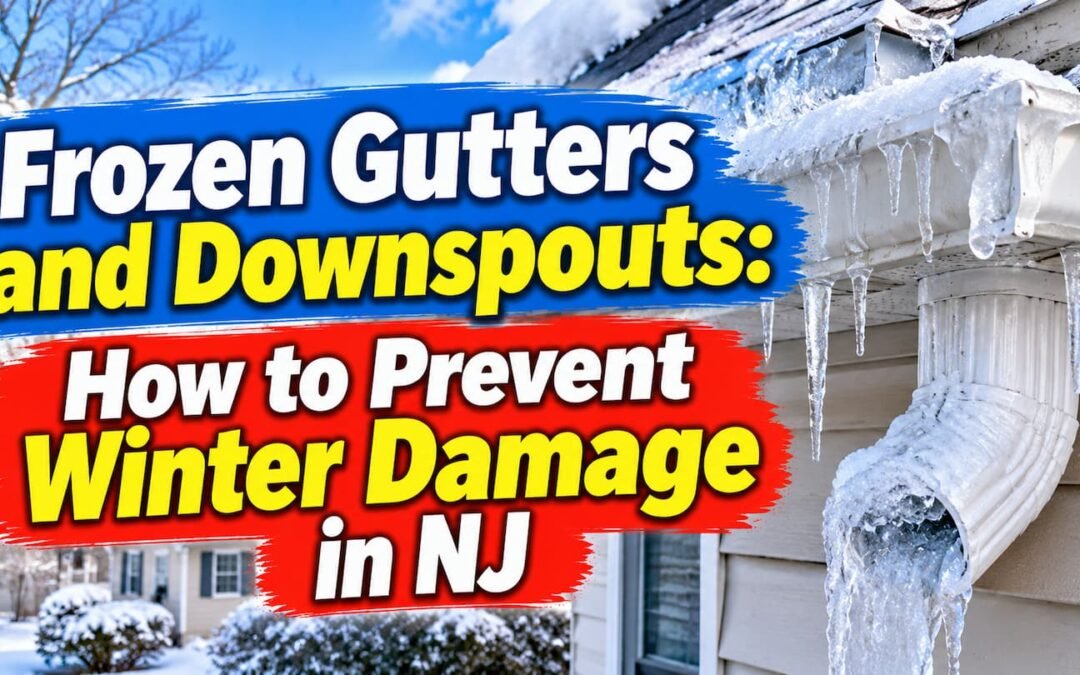
New Jersey winters rarely stay frozen for long. Snow falls, melts in the afternoon sun, and freezes again overnight. That cycle is exactly what turns a gutter system into a block of ice. Frozen gutters NJ homeowners deal with can sag, pull away from the fascia, split at the seams, and send meltwater over the edge where it refreezes on steps and walkways. The good news is that most of this damage starts with problems you can deal with before the cold sets in.
At Jar Gutter Services, we clean, repair, install and replace gutters across Monmouth County and Central New Jersey. Here’s what happens when gutters and downspouts freeze, and the safe steps that help prevent it.
Why Gutters and Downspouts Freeze
Gutters are designed to move water quickly. Most frozen gutters NJ homeowners call us about share the same root cause: water sits in the gutter instead of draining. The usual reasons are:
- Leftover leaves and debris. Fall leaves that were never cleaned out hold water and slush like a sponge.
- Poor slope. A gutter that is level, or pitched the wrong way, leaves standing water in low spots.
- Blocked downspouts. A clogged elbow or a crushed extension stops the flow, so water backs up into the gutter.
- Daily melt and refreeze. Snow on the roof melts during the day, runs into a cold gutter, and freezes again at night, adding a new layer of ice each time.
A quick note on ice dams: the ridge of ice that forms at the roof edge and pushes water under the shingles is a roofing issue tied to attic heat and insulation. Clogged gutters can make it worse, but this article focuses on the gutters and downspouts themselves.
Signs of Frozen Gutters NJ Homeowners Should Watch For
- Large icicles hanging along one section of gutter instead of a few small ones.
- Gutters visibly sagging or tilting away from the house.
- Water spilling over the front edge on a mild day, even though it isn’t raining hard.
- Nothing coming out of a downspout during a thaw.
- Ice patches forming on the same walkway, driveway spot or stoop every winter.
- Drips or stains on the siding right below a gutter seam.
If you are seeing several of these, it’s worth reading our guide to the signs of gutter damage before spring.
What Ice Can Do to Your Gutter System
Sagging and pulling away from the house
Ice is heavy. As it builds up, it puts weight on the hangers and fasteners that hold the gutter to the fascia. Over time the gutter can bend, loosen, or pull partly away from the house. Once that happens, water no longer drains where it should, which leads to more ice the next time.
Split seams and leaking joints
Water expands as it freezes. In sectional gutters, the joints and end caps are common weak points, and repeated freezing can open them up. Seamless gutters have far fewer joints, which is one reason to consider them when you replace an old system.
Overflow that refreezes on walkways
When a gutter is full of ice, meltwater runs over the edge and lands on whatever is below: front steps, a walkway, a deck or the driveway. At night it freezes into a slick sheet. Clearing and deicing those spots helps, but the real fix is getting the gutter to drain again.
Water at the foundation
A frozen downspout can’t carry water away, so it either overflows at the top or dumps meltwater right against the house. Water that collects at the foundation can find its way into a basement or crawlspace. Our article on how to prevent basement flooding covers this in more detail.
How to Prevent Frozen Gutters in New Jersey
1. Clean gutters thoroughly in the fall
FEMA’s winterizing guidance advises keeping gutters clear of leaves, sticks and other debris so melting snow can drain, and warns that skipping it can lead to clogged, sagging or detached gutters. In our area, the last cleaning should happen after most of the leaves have dropped. Our winter gutter prep checklist walks through the full routine.
2. Check the slope
Gutters need a slight, steady pitch toward each downspout so water doesn’t sit. If you notice standing water after a rain, the slope may need adjusting. Learn more about gutter slope for effective drainage.
3. Keep downspouts clear and pointed the right way
FEMA also recommends making sure downspouts direct water away from the foundation. Just as important in winter: point the discharge away from walkways, steps and the driveway, so runoff doesn’t freeze where people walk. Check that extensions are attached and not crushed by snow or a plow.
4. Consider gutter guards
Gutter guards help keep leaves and debris out, so there is less material in the gutter to hold water and freeze. They are not a substitute for occasional maintenance, but they can make a real difference. See our comparison of gutter guards or regular cleaning.
5. Fix loose hangers and leaking seams before winter
A gutter that is already loose or leaking will fail faster under ice. Tightening hangers and sealing seams in the fall is far easier than dealing with a gutter that came down in February.
What Not to Do When Gutters Are Already Frozen
- Don’t climb a ladder on ice or snow. The U.S. Consumer Product Safety Commission advises setting ladders on stable ground and never standing on the top rung, and notes that adults 65 and older are 80% more likely than other adults to visit an emergency room for ladder or stool injuries. Frozen ground and icy rungs are the opposite of stable.
- Don’t chip or hammer at the ice. It’s easy to dent or puncture the gutter, break hangers, or damage the roof edge.
- Don’t pour hot water into the gutter. It can refreeze quickly and add more ice.
- Don’t pile shoveled snow against the house or over downspout outlets. That snow becomes meltwater right at your foundation.
From the ground, it is fine to clear snow and ice away from downspout outlets and to deice walkways below the gutters. Anything above that is a job for a professional once conditions are safe.
When to Call a Pro
Call us if a gutter is sagging or pulling away, a seam is leaking, a downspout stays blocked after a thaw, or ice keeps forming in the same place every winter. Sometimes a repair is enough; other times an older system needs replacing. Our post on gutter repair vs. replacement explains how we help homeowners decide.
Frequently Asked Questions
Why do frozen gutters NJ homeowners deal with keep coming back every winter?
Usually because something keeps water sitting in the gutter: leftover debris, a poor slope, or a blocked downspout. Repeated melt and refreeze cycles then add ice day after day. Fixing the drainage problem is what stops the pattern.
Can frozen gutters damage my house?
Yes. Ice can make gutters sag or pull away from the fascia, open up seams, and send meltwater over the edge where it refreezes on walkways or soaks the ground at the foundation.
Should I try to break the ice out of my gutters?
No. Chipping at ice can damage the gutter and the roof edge, and climbing an icy ladder is dangerous. Clear what you can from the ground, like downspout outlets and walkways, and call a professional for anything up high.
Do gutter guards stop gutters from freezing?
Not completely. They help by keeping out the leaves and debris that hold water, which reduces the chance of ice buildup. Good slope and clear downspouts still matter.
When should I clean my gutters before winter in New Jersey?
Late fall, after most of the leaves have come down, is the best time for the final cleaning before winter. Homes with a lot of trees nearby may need more than one fall visit.
Get Help With Frozen Gutters NJ Winters Bring
Whether you are dealing with frozen gutters NJ storms left behind or want to prevent them next year, Jar Gutter Services can take a look and recommend cleaning, repairs, gutter guards or seamless replacement. We serve homeowners in Monmouth County and Central New Jersey. Call (732) 682-5451, stop by 3030 W Bangs Ave, Neptune, NJ 07753, or request a free quote online.