
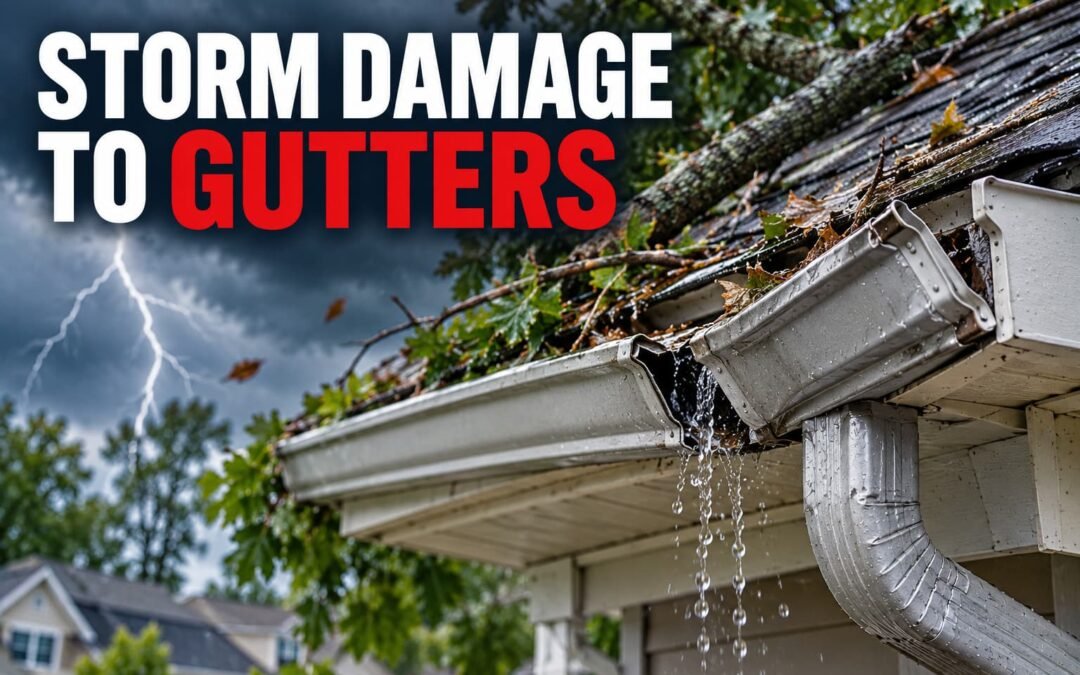
Storm Damage Gutter Repair NJ
Severe storms can damage a gutter system even when the damage isn’t immediately visible from the ground. Heavy rain, strong winds, falling branches, wind-driven debris, and other storm conditions can loosen gutters, damage downspouts, alter gutter pitch, create leaks, and reduce the system’s ability to move roof runoff safely away from your home. The National Weather Service’s severe weather safety guidance provides additional information about storm conditions and potential hazards.
After a major storm, homeowners often inspect their roof, siding, windows, and trees—but gutters should also be part of the post-storm inspection.
A gutter may still be hanging from the roof and look relatively normal while no longer draining water correctly.
Why Storm Damage to Gutters Matters
Your gutter system has an important job during severe weather.
Rainwater hits the roof, travels toward the roof edge, enters the gutters, moves toward the downspouts, and is discharged away from the home.
When storm damage interrupts any part of that process, water can begin going somewhere it shouldn’t.
Depending on the problem, homeowners may notice:
- Gutters overflowing
- Water leaking from seams
- Gutters pulling away from the fascia
- Sagging sections
- Damaged downspouts
- Water running behind the gutter
- Standing water inside gutters
- Water collecting around the property
- Soil or landscaping erosion
Some storm-related gutter problems require relatively minor repairs. More extensive damage may require sections—or sometimes the entire gutter system—to be replaced.
Here are some of the most important problems to look for.
1. Strong Winds Can Pull Gutters Away From the House
Strong winds can place significant stress on exterior components of a home.
Gutters that already have weakened attachment points may become loose or begin separating from the fascia.
After a storm, look from ground level for:
- Gaps between the gutter and fascia
- Sections that appear lower than others
- Loose or displaced components
- Gutters that no longer follow the roofline correctly
- Downspouts that have separated from the wall
Even a relatively small change in position can affect how water enters and moves through the gutter.
A gutter doesn’t necessarily have to fall off the house to have storm damage.
2. Falling Branches Can Bend or Crush Gutters
Trees can create another major source of storm-related damage.
Strong winds can break branches and send them onto roofs and gutters.
A branch doesn’t have to be enormous to cause a problem.
Impact can potentially:
- Dent the gutter
- Bend the gutter profile
- Damage gutter edges
- Loosen hangers
- Separate joints
- Damage downspouts
- Alter gutter alignment
A badly deformed section may restrict water flow.
This becomes particularly important during the next heavy rainfall because the damaged area can become a bottleneck.
3. Heavy Rain Can Expose Existing Gutter Problems
Sometimes the storm doesn’t create the problem—it exposes one that was already developing.
A gutter system may appear to function normally during light rain but fail when subjected to a much larger volume of roof runoff.
During a severe storm, homeowners may suddenly notice water pouring over the gutter.
Possible causes include:
- Clogged gutters
- Restricted outlets
- Blocked downspouts
- Insufficient gutter capacity
- Too few downspouts
- Improper gutter pitch
- Sagging sections
- Concentrated runoff from roof valleys
This is an important distinction.
Storm-related overflow doesn’t automatically mean the gutters need replacement.
The cause should be diagnosed first.
4. Storm Debris Can Clog Gutters and Downspouts
Storms can deposit significant amounts of debris onto roofs and into gutters.
Depending on the property, this can include:
- Leaves
- Twigs
- Small branches
- Seeds
- Pine needles
- Roofing debris
- Other wind-blown material
The gutter itself may appear relatively clear while the outlet or downspout is partially blocked.
When the next rain arrives, water may not leave the gutter quickly enough.
The result can be overflow.
This is why a post-storm inspection should include both the gutters and downspouts.
5. Storm Damage Can Change the Gutter Pitch
Gutter pitch is subtle.
From the street, gutters can appear perfectly level even though they are installed with drainage toward their outlets.
Storm damage can potentially disturb that alignment.
A loosened hanger, physical impact, or movement in a section can create a low point where water begins collecting.
Signs of a possible pitch problem include:
- Standing water after the storm
- Overflow in one specific area
- Water moving away from the downspout
- Debris repeatedly collecting in the same location
- Visible sagging
Simply cleaning the gutter won’t correct a pitch or alignment problem.
6. Downspouts Can Become Loose or Damaged
Downspouts are just as important as gutters.
The gutter collects the water.
The downspout gets rid of it.
Strong winds, falling debris, or physical impact can loosen downspouts or separate connections.
Check for:
- Loose downspout sections
- Separated elbows
- Crushed areas
- Missing fasteners
- Disconnected outlets
- Downspouts pulling away from the home
A damaged downspout can prevent the gutter system from draining efficiently even when the gutters themselves remain intact.
7. Storms Can Damage Seams and Corners
Gutter corners, joints, outlets, and other connection points can be vulnerable areas.
Movement or impact during severe weather may contribute to leaks around these locations.
You may not notice anything while the weather is dry.
Then the next storm arrives and water begins dripping or streaming from a connection.
One isolated leak may be repairable.
Multiple leaks across an older gutter system may indicate more extensive deterioration that should be evaluated.
Storm Damage Checklist for Your Gutters
After severe weather has passed, homeowners can perform a basic visual inspection from a safe location on the ground.
| What You See | Possible Problem | Recommended Action |
|---|---|---|
| Gutter pulling away | Loose attachment/hanger damage | Professional inspection |
| Large dent | Impact damage | Inspect water flow |
| Sagging section | Hanger, pitch or structural issue | Repair evaluation |
| Water overflowing | Clog or capacity issue | Diagnose cause |
| Leaking corner | Joint/seal damage | Repair evaluation |
| Loose downspout | Storm/wind damage | Reattach or repair |
| Standing water | Pitch or obstruction problem | Inspect system |
| Branch inside gutter | Impact/debris | Safe professional removal |
| Water behind gutter | Position or roof-edge issue | Professional inspection |
Avoid climbing onto a wet roof or using a ladder during dangerous weather conditions.
Can Storm-Damaged Gutters Be Repaired?
Yes, depending on the damage.
Not every storm-damaged gutter needs complete replacement.
Repair may be appropriate when:
- One hanger is loose
- A connection has separated
- A downspout section is damaged
- A localized leak has developed
- One small section has shifted
- The rest of the gutter system remains structurally sound
Replacement may be worth considering when:
- Multiple sections are badly damaged
- Gutters are extensively bent
- Large portions have separated from the home
- The existing system already had significant deterioration
- Multiple repairs have previously been performed
- The gutter system no longer drains correctly
- Repairing the damage would leave an unreliable system
The decision should be based on the overall condition and performance of the system, not simply the appearance of one damaged area.
What If My Gutters Look Fine After the Storm?
This is where homeowners should pay close attention.
Not every gutter problem is obvious when the weather becomes sunny again.
Watch how the system performs during the next rainfall.
Look for:
- Overflow
- Unexpected dripping
- Water behind the gutter
- Water collecting in one area
- Downspouts that aren’t discharging properly
- Water pooling near the house
Performance can reveal problems that aren’t obvious from appearance alone.
Storm Damage vs. Normal Gutter Wear
This distinction can sometimes be difficult.
A storm may cause new damage, but severe weather can also reveal weaknesses that existed beforehand.
For example, a gutter already suffering from loose hangers may begin sagging noticeably after a storm.
An older seam may start leaking.
A partially restricted downspout may overflow when subjected to intense rainfall.
That’s why a professional inspection should look for both the visible damage and the underlying condition of the system.
Should You Inspect Your Gutters After Every Major Storm?
You don’t necessarily need a professional inspection after every rainfall.
However, a visual check can be worthwhile after severe weather involving:
- Strong winds
- Heavy rainfall
- Falling branches
- Significant debris
- Visible exterior property damage
Pay particular attention if you already know your gutters are older or have previously required repairs.
Catching a loose or damaged section early may prevent the problem from becoming more extensive.
What Should a Professional Post-Storm Gutter Inspection Include?
A thorough inspection should evaluate more than visible dents.
The gutter professional may need to examine:
- Gutter attachment points
- Hangers
- Gutter alignment and pitch
- Seams and corners
- Signs of impact damage
- Outlets
- Downspouts
- Debris and possible obstructions
- Roof areas that concentrate runoff
- Water discharge locations
The goal should be to answer one important question:
Can this gutter system still move roof runoff safely and efficiently away from the home?
Frequently Asked Questions About Storm-Damaged Gutters
Can strong winds damage gutters?
Strong winds can contribute to loosened gutters, displaced components, or downspout damage, particularly when attachment points or other components are already weakened.
Can heavy rain damage gutters?
Heavy rainfall can place significant demands on a gutter system and expose existing problems such as clogs, inadequate capacity, sagging, poor pitch, or restricted downspouts.
Should I replace dented gutters after a storm?
Not automatically. Minor cosmetic dents may not prevent a gutter from functioning. More significant deformation that affects drainage, alignment, seams, or structural integrity should be professionally evaluated.
Why did my gutters start leaking after a storm?
Storm-related movement, impact, debris, or existing deterioration can contribute to leaks at seams, corners, outlets, or damaged sections.
Why are my gutters overflowing after a storm?
Storm debris may have created a blockage, but overflowing can also indicate downspout restrictions, pitch problems, insufficient capacity, or concentrated roof runoff.
Should I check my gutters after a tree branch hits my roof?
Yes. Even if the gutter remains attached, impact may have damaged the gutter, hangers, alignment, seams, downspout connections, or nearby roof-edge components.
Don’t Wait for the Next Storm to Discover the Damage
One of the biggest mistakes homeowners can make after severe weather is assuming that gutters are fine simply because they’re still attached to the house.
A gutter can look normal from the ground while being loose, improperly pitched, partially obstructed, leaking, or damaged.
The real test is whether the entire system can still:
Collect the water → move it through the gutters → drain it through the downspouts → direct it away from the property.
If your home has recently experienced severe weather and you’ve noticed leaking, overflowing, sagging, loose gutters, damaged downspouts, or other drainage problems, Jar Gutter Services can inspect the system and determine whether gutter repair or replacement is appropriate.
Contact Jar Gutter Services
Need help with storm-damaged gutters in New Jersey?
Contact Jar Gutter Services for professional gutter inspection, repair, replacement, and installation services.
Office: 732-682-5451
Email: info@jargutterservices.com
Website: https://jargutterservices.com/